

Artificial Intelligence is rapidly changing the world of cybersecurity. From detecting threats in real time to launching automated cyberattacks, AI has become one of the most powerful technologies in the digital era. Governments, tech companies, and cybersecurity agencies are now investing billions to protect systems against AI-driven hacking tools that are growing more advanced every day.
Experts warn that cybercriminals are increasingly using AI to automate attacks, crack passwords, generate phishing emails, and exploit software vulnerabilities faster than ever before. At the same time, organizations are also deploying AI-based defense systems to stop attacks before damage occurs.
The rise of AI in cybersecurity is creating a new digital battlefield where machines are fighting machines. This technological shift is reshaping global security, online privacy, banking systems, and even national defense strategies.
What Is AI-Powered Cybersecurity?
AI-powered cybersecurity refers to the use of Artificial Intelligence and machine learning technologies to detect, prevent, and respond to cyber threats automatically. Unlike traditional security systems that rely heavily on manual monitoring, AI systems can analyze huge amounts of data in seconds and identify suspicious activities instantly.
Modern AI cybersecurity platforms can:
- Detect malware automatically
- Monitor network behavior in real time
- Predict cyberattacks before they happen
- Identify unusual login attempts
- Stop ransomware attacks
- Analyze billions of security events daily
AI is making cybersecurity faster, smarter, and more efficient than traditional methods.
How Hackers Are Using Artificial Intelligence
While AI is helping companies improve security, cybercriminals are also taking advantage of the technology. AI-powered hacking tools are becoming more dangerous because they can automate attacks at a massive scale.
AI-Generated Phishing Emails
One of the biggest threats today is AI-generated phishing scams. Criminals use AI chatbots and language models to create highly convincing emails that look authentic. These messages can imitate banks, companies, or government agencies with professional grammar and personalized details.
Unlike old phishing scams filled with spelling mistakes, AI-generated scams appear realistic and are harder to detect.
Automated Password Cracking
Hackers are using machine learning algorithms to predict passwords faster than traditional hacking software. AI tools can study password patterns and break weak credentials within seconds.
Deepfake Cyber Attacks
Deepfake technology powered by AI can clone voices and videos of real people. Cybercriminals are now using deepfake audio to impersonate company executives and trick employees into transferring money or sharing confidential data.
Intelligent Malware
AI-based malware can adapt to security systems and change its behavior to avoid detection. This makes cyberattacks more difficult to stop using traditional antivirus software.
Why Governments Are Worried About AI Cyber Threats
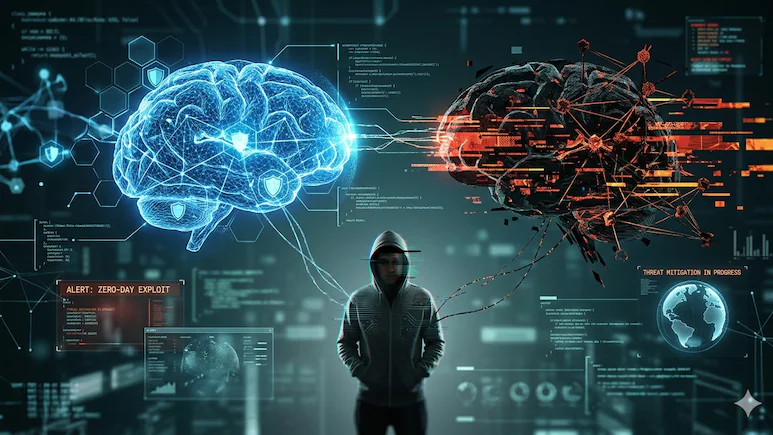
Governments around the world consider AI-driven cyberattacks a major national security risk. Critical infrastructure such as power grids, hospitals, airports, military networks, and banking systems are increasingly connected to digital technologies.
A successful AI cyberattack on these systems could disrupt entire economies and public services.
Cyber Warfare Between Nations
Several countries are investing heavily in AI-powered cyber defense programs. Intelligence agencies fear that future wars may involve digital attacks targeting communication networks, satellites, and financial systems instead of traditional military operations.
Protection of Critical Infrastructure
Governments are strengthening cybersecurity laws and increasing funding for AI security research. National cyber agencies are also collaborating with private tech companies to develop stronger defense mechanisms.
How Companies Are Using AI for Cyber Defense
Major technology companies are building advanced AI security systems to protect users and businesses from cyber threats.
Real-Time Threat Detection
AI can analyze network traffic continuously and detect suspicious activity immediately. This helps organizations stop attacks before hackers gain access to sensitive data.
Predictive Security Systems
Modern AI systems can predict potential vulnerabilities by studying historical attack patterns. Companies can fix weaknesses before hackers exploit them.
Automated Incident Response
AI tools can automatically isolate infected devices, block malicious IP addresses, and notify security teams during an attack. This reduces response time and limits damage.
Fraud Prevention
Banks and financial institutions use AI to monitor transactions and detect unusual behavior. If suspicious activity is identified, systems can freeze accounts instantly to prevent fraud.
Industries Most Vulnerable to AI Cyberattacks
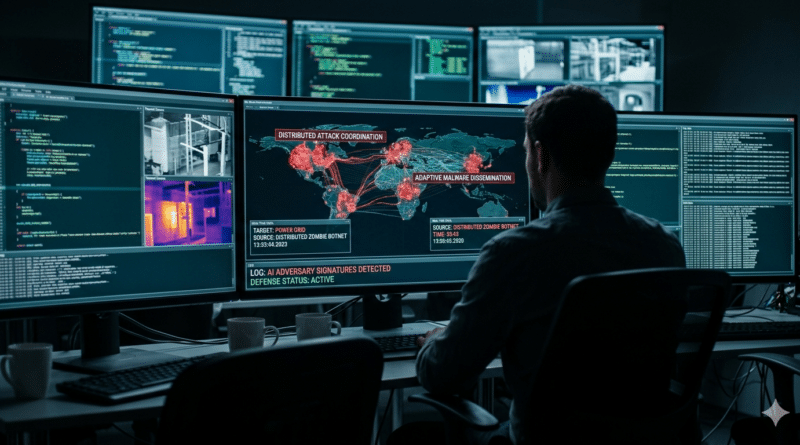
AI cyber threats are affecting nearly every industry. However, some sectors are at higher risk because of the sensitive data they manage.
Banking and Financial Services
Banks face constant cyber threats involving online fraud, identity theft, and ransomware attacks. AI-powered scams targeting digital payments are increasing rapidly.
Healthcare Industry
Hospitals and healthcare organizations store massive amounts of patient data. Cybercriminals often target healthcare systems because they are critical services that cannot afford downtime.
E-Commerce Platforms
Online shopping websites handle millions of customer transactions daily. AI-based fraud detection systems are becoming essential for e-commerce security.
Government Agencies
Government databases contain sensitive national information. AI-powered cyber espionage has become a serious global concern.
The Role of Machine Learning in Cybersecurity
Machine learning is one of the most important branches of AI used in cybersecurity. It allows systems to learn from data and improve performance over time.
Behavioral Analysis
Machine learning systems can study user behavior patterns and identify unusual activities. For example, if an employee suddenly logs in from another country, the system may trigger a security alert.
Threat Intelligence
AI tools gather information from millions of cyber incidents worldwide and use that data to identify emerging threats faster.
Malware Classification
Machine learning algorithms can recognize malicious software even if hackers modify the code slightly to avoid detection.
Challenges of AI in Cybersecurity
Although AI offers powerful security advantages, it also introduces new challenges.
False Positives
AI systems sometimes incorrectly identify safe activities as threats, which can create unnecessary alerts and confusion.
Data Privacy Concerns
AI security systems require large amounts of data to function effectively. This raises concerns about user privacy and data protection.
High Implementation Costs
Advanced AI cybersecurity platforms can be expensive for small businesses and startups.
AI vs AI Battle
As defenders improve AI security tools, hackers continue developing more sophisticated AI attack systems. This creates an ongoing technological arms race.
Future of AI and Cybersecurity
The future of cybersecurity will heavily depend on Artificial Intelligence. Experts believe AI systems will become even more autonomous in identifying and neutralizing threats.
Emerging technologies such as quantum computing, smart cities, autonomous vehicles, and Internet of Things (IoT) devices will require stronger AI-driven security solutions.
Cybersecurity professionals are also expected to work closely with AI systems rather than replacing them completely. Human expertise combined with machine intelligence may become the most effective defense strategy.
Final Thoughts
Artificial Intelligence is transforming cybersecurity faster than any previous technology. While AI helps organizations detect threats and improve digital safety, it also empowers cybercriminals with more advanced attack capabilities.
The rise of AI-powered hacking tools marks the beginning of a new era in cyber warfare where speed, automation, and machine intelligence play critical roles. Governments, businesses, and individuals must adapt quickly to this changing threat landscape.
As cyber threats continue evolving, investing in AI cybersecurity solutions will become essential for protecting personal data, financial systems, and national infrastructure in the digital age. The future of cybersecurity is no longer just about humans defending networks — it is increasingly about intelligent machines protecting the digital world from other intelligent machines.