
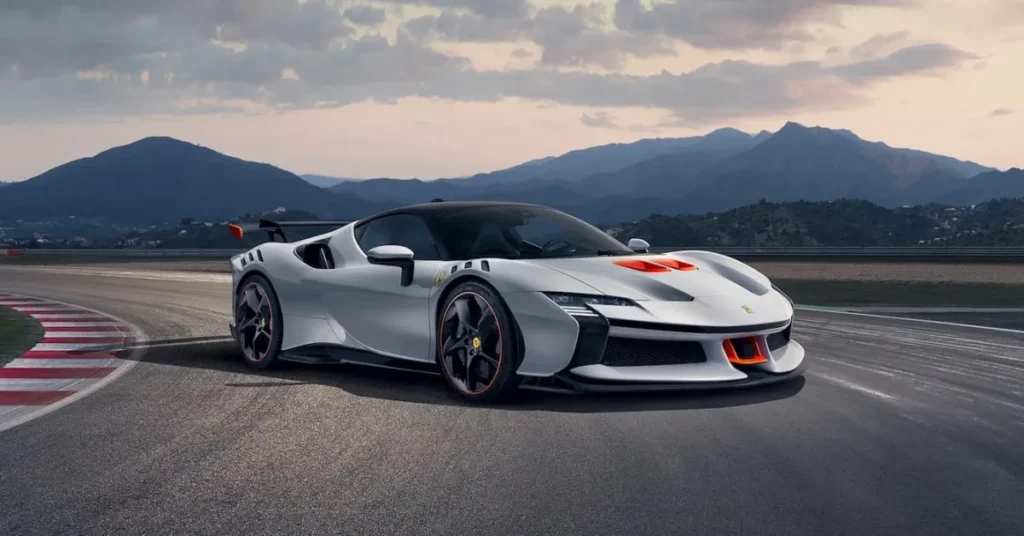

The official unveiling of the Ferrari Luce EV created massive global attention immediately after its reveal in Italy. Reports suggest the luxury electric supercar produces nearly 1,000 horsepower and accelerates from 0 to 100 km/h in approximately 2.5 seconds.
The futuristic design of the vehicle combines Ferrari’s traditional sports car DNA with advanced electric vehicle technology. The launch event showcased Ferrari’s focus on performance, sustainability, and next-generation innovation.
Industry analysts believe the Ferrari Luce EV could completely change the luxury electric supercar segment. Competing brands like Tesla, Porsche, Lamborghini, and Rimac are already dominating parts of the EV market, but Ferrari’s entry introduces a completely different level of prestige and emotional brand power.
Ferrari Enters the Electric Vehicle Revolution
The automobile industry is rapidly moving toward electrification. Governments worldwide are introducing strict environmental regulations, while consumers are increasingly demanding cleaner and smarter transportation options.
Ferrari had previously introduced hybrid supercars, but the Luce EV marks the company’s first fully electric production vehicle. This decision reflects the changing future of the automotive market.
Why Ferrari Decided to Build an Electric Supercar
Ferrari’s move toward electric technology is influenced by several important factors:
- Global emission regulations
- Increasing demand for EVs
- Advancements in battery technology
- Competition from electric supercar brands
- Sustainability goals for future mobility
Electric vehicles are no longer seen as slow or boring transportation options. Modern EV technology now delivers incredible acceleration, intelligent software systems, and advanced performance capabilities. Ferrari aims to prove that electric supercars can still deliver excitement, passion, and emotional driving experiences.
Ferrari Luce EV Design Creates Global Discussion
One of the biggest reasons the Ferrari Luce EV became viral online is its futuristic design language. Ferrari introduced a completely modern appearance while preserving iconic styling elements associated with the brand.
The vehicle features:
- Sharp aerodynamic body lines
- Aggressive LED lighting
- Futuristic front grille design
- Large aerodynamic wheels
- Lightweight carbon-fiber construction
Interior Technology Looks Like the Future
Inside the Ferrari Luce EV, the company focused heavily on digital technology and luxury comfort.
The interior reportedly includes:
- AI-powered digital displays
- Fully connected infotainment systems
- Advanced voice controls
- Premium leather seating
- Racing-inspired cockpit layout
Ferrari also integrated next-generation driver assistance systems that improve safety while maintaining high-performance driving characteristics.
Minimalist Yet Luxury Cabin Design
Unlike traditional Ferrari interiors that focused heavily on mechanical driving elements, the Luce EV introduces a cleaner and more minimalist design approach.
Large touchscreens, customizable digital dashboards, and intelligent software systems dominate the cabin experience. However, Ferrari still maintained its premium luxury identity with handcrafted materials and exclusive interior finishes.
Performance Specifications Shock the Automotive Industry
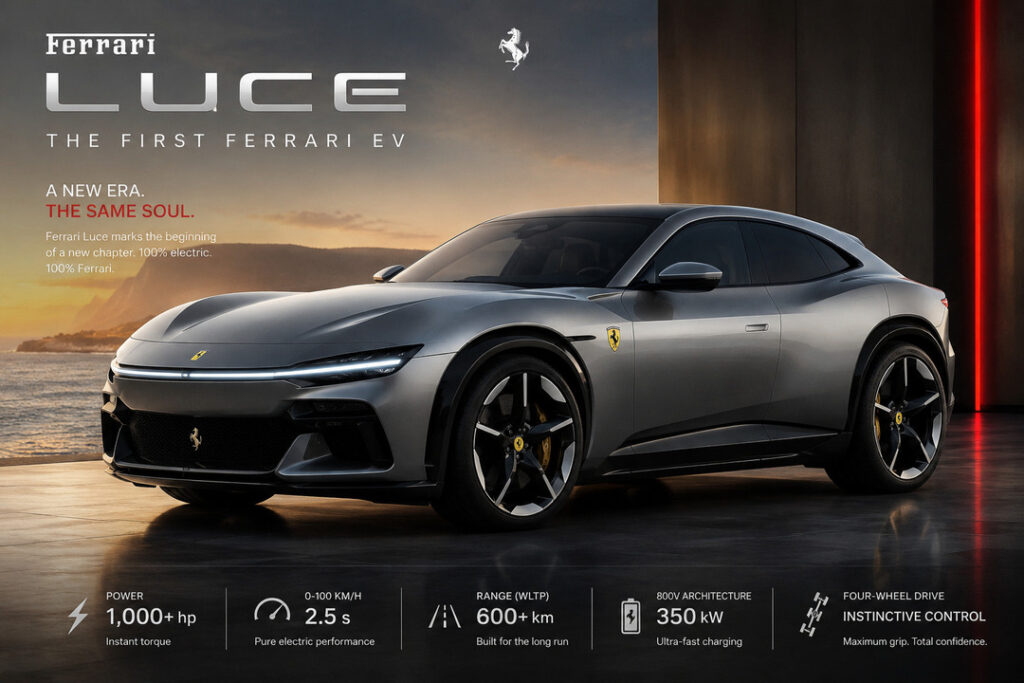
Performance remains the heart of Ferrari’s identity, and the Luce EV appears to deliver extraordinary numbers.
Reports indicate:
- Nearly 1,000 horsepower
- 0–100 km/h in around 2.5 seconds
- Advanced all-wheel-drive system
- Ultra-fast battery charging
- High-performance electric motors
Electric Power Changes Supercar Performance
Electric vehicles offer instant torque delivery, allowing extremely fast acceleration compared to traditional combustion engines.
The Ferrari Luce EV benefits from:
- Instant power response
- Silent acceleration
- Improved weight distribution
- Advanced battery cooling systems
- Smart performance management software
Ferrari engineers reportedly spent years developing a balance between raw speed and emotional driving dynamics.
Can Electric Cars Replace Traditional Ferrari Engines?
This question has become one of the biggest debates among Ferrari fans worldwide.
Many enthusiasts believe Ferrari’s traditional V8 and V12 engine sounds are part of the brand’s soul. However, younger buyers are increasingly embracing electric technology and futuristic mobility solutions.
Ferrari hopes the Luce EV can satisfy both traditional enthusiasts and modern EV buyers.
Social Media Explosion Makes Ferrari Luce EV Viral
The Ferrari Luce EV launch quickly exploded across platforms like YouTube, Instagram, TikTok, and X (formerly Twitter).
Millions of users shared:
- Reveal event videos
- Performance discussions
- Design comparisons
- Interior technology clips
- Speculation about pricing
Why Google Searches for Ferrari Luce EV Increased Rapidly
Several reasons pushed the Ferrari Luce EV into worldwide Google trends:
- Ferrari’s first electric vehicle
- Futuristic supercar design
- Extreme performance claims
- Luxury EV competition
- Global automotive transformation
Automotive influencers and tech creators also played a major role in spreading discussions around the launch.
Ferrari Faces Strong Competition in the EV Market
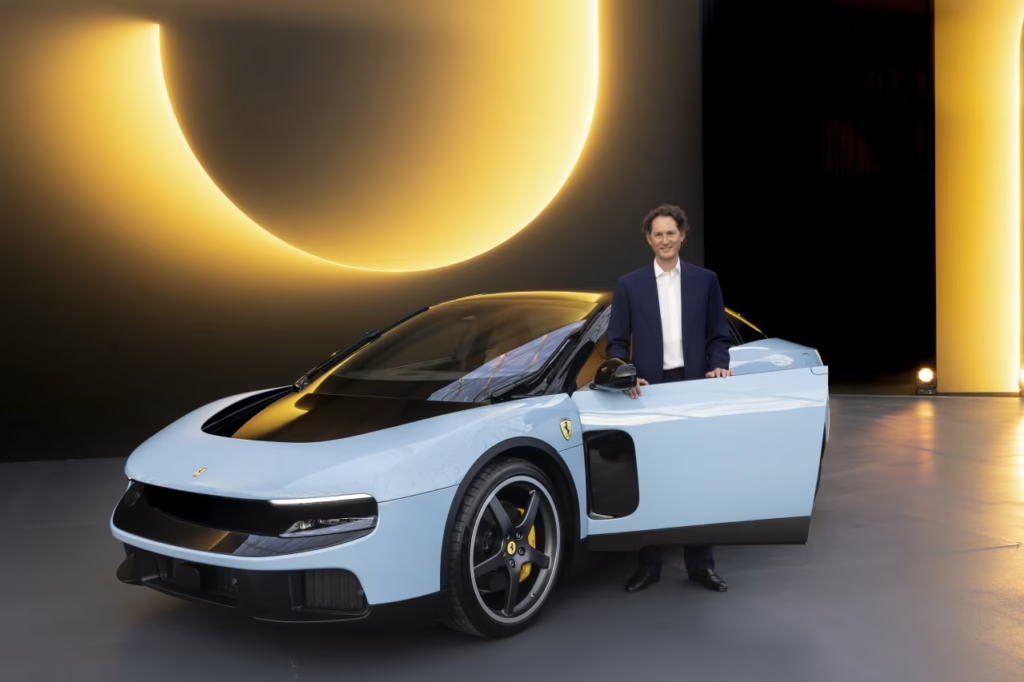
Although Ferrari is one of the world’s most respected automotive brands, the electric supercar market is becoming increasingly competitive.
Key rivals include:
- Tesla Roadster
- Porsche Taycan Turbo GT
- Rimac Nevera
- Lamborghini Lanzador
- Lotus Evija
Ferrari’s Biggest Advantage Is Brand Emotion
Unlike many technology-focused EV brands, Ferrari has decades of racing history and emotional brand loyalty.
Ferrari customers are not only purchasing performance cars — they are buying exclusivity, prestige, and automotive heritage.
Sustainability and Luxury Can Exist Together
The Ferrari Luce EV also represents the luxury industry’s growing focus on sustainability.
Modern consumers increasingly expect luxury brands to:
- Reduce emissions
- Use sustainable materials
- Improve energy efficiency
- Support green technology innovation
Ferrari’s transition into electric vehicles reflects how even premium performance brands are adapting to environmental expectations.
Future Ferrari Models Could Become Fully Electric
Industry experts predict Ferrari may introduce additional electric models in the coming years.
Potential future developments include:
- Electric SUVs
- Hybrid racing vehicles
- AI-enhanced driving systems
- Autonomous support technology
- Advanced battery innovation
The Luce EV could become the foundation for Ferrari’s long-term electric future.
Automotive Industry Enters a New Era
The Ferrari Luce EV launch symbolizes more than just a new supercar release. It highlights the transformation of the entire automotive world.
Modern vehicles are becoming:
- Electrified
- Software-powered
- AI-connected
- Environmentally focused
- Digitally integrated
Traditional car companies are now competing not only on horsepower but also on software, battery efficiency, and smart mobility systems.
Final Thoughts on Ferrari Luce EV
The Ferrari Luce EV has already become one of the biggest automotive stories of 2026. The combination of luxury, electric performance, futuristic design, and Ferrari’s legendary reputation created massive global attention immediately after its reveal.
While some traditional fans remain uncertain about Ferrari entering the electric era, many experts believe the Luce EV represents the future of high-performance luxury transportation.
As electric vehicle technology continues evolving, Ferrari’s bold move may inspire the next generation of supercars worldwide. The Luce EV is not simply Ferrari’s first electric car — it is the beginning of a completely new chapter in automotive history.