


Key Points The banking world is undergoing a seismic leadership change as JPMorgan Chase & Co. rolled out an executive succession plan. The announcement has attracted interest from investors, analysts and financial experts around the globe as it gives more visibility to the bank’s long-term succession strategy.
Jamie Dimon (President and CEO of JP Morgan Chase) will continue as Chief Executive Officer for three years [up to 2023] since he is well-connected banking leader on this planet? Meanwhile, JPMorgan has reassigned a number of senior executives as it positions the next generation to lead. It is a move intended to bolster investor confidence, have a continuity plan in place for the business and keep the bank as largest U.S. bank by assets
The timing of the succession plan, coinciding with economic uncertainty, rising interest rates and rapidly evolving technology and regulatory oversight present both headwinds to global financial markets. The onus is on JPMorgan to project a clear path forward with its leadership as it incurses these long-term growth and shareholder confidence risks.
JPMorgan’s Leadership Succession Plan Is in the Spotlight
Leadership shifts at one of the largest financial institutions in the world rarely fly under the radar. JPMorgan’s announcement is especially important because Jamie Dimon has led the bank through economic crisis after economic crisis, including the global financial collapse of 2008, COVID-19 and instances of market volatility.
Your succession plan is only going to be your best bet when you are preparing for a leadership transition vs simply responding to an unexpected event, as evidenced by the latest succession plan.
Highlights from the Announcement
- Jamie Dimon is expected to remain in the role of CEO for at least the next three years, as per plans.
- The appointments of senior executives to enhanced leadership roles.
- The restructuring promotes an orderly and well-planned transition from one CEO to another.
- Investors now have a clearer understanding of the long-term management strategy for the bank.
Why Leadership Planning Matters
Continued leadership stability, perhaps surprisingly, is key to inspiring customers and investor confidence and navigating regulatory compliance among the world’s financial institutions. However, a well-planned succession strategy allows to mitigate any uncertainty and dreams of operational continuity.
Who Is Jamie Dimon?
Jamie Dimon has been a banking overlord for almost twenty years. Under his leadership, JPMorgan has become one of the strongest most profitable financial institutions on Earth.
Recognised around the globe from investors to policymakers for his strategic moves during financial downturns.
Notable Accomplishments Under Jamie Dimon Outside of His Political Views
During his tenure, JPMorgan has:
- Expanded its global banking operations.
- Increased annual revenue and profitability.
- Strengthened its investment banking division.
- Pumped a huge investment into digital banking and artificial intelligence.
- Robust capital and liquidity positions
A Legacy of Stability
Under Dimon’s leadership style, there have been disciplined risk management, long-term strategic planning and a strong focus on innovation. It has these qualities that JPMorgan continues to use to navigate itself through financially troubled times.
Why Is JPMorgan Planning for a CEO Succession Now?
Succession planning is one of the top responsibilities of any corporate board. It can limit disruption before it happens by putting in place many of those future leaders long in advance of the retirement of the CEO.
In contrast to competitors that wait until the end, JPMorgan has thus banked on skilled managers capable of taking the organization forward.
Advantages of planning for succession from the beginning
Structured successions have several benefits:
- Stronger leadership continuity.
- Higher investor confidence.
- Reduced operational risk.
- Better long-term strategic execution.
- More confident in the future of organization.
Lessons from the History of Corporate Transitions
It is no news for a lot, there uncertainty in many big organizations due to sudden leadership changes. JPMorgan hopes to avoid navigating similar challenges by planning years in advance, which also demonstrates strong corporate governance.
Restructuring at the Top to Emphasize a New Generation
In conjunction with the succession well into creating a new leadership structure, JPMorgan has shuffled several senior executives around in recent weeks. Though Jamie Dimon will continue as chief executive officer, the moves — not unexpected—provides floor time for possible successors to benefit in wider arenas of important business units.
This provides the board of directors with an opportunity to review historical performance in this regard while providing succession opportunities for executives.
Goals of the Changes in Executive Chairs
The restructuring is intended to:
- Develop future leadership talent.
- Strengthen decision-making across business units.
- Improve collaboration between divisions.
- Enhance strategic planning capabilities.
- Ensure long-term organizational stability.
Development of leadership pipeline
Executive leaders know the culture, business, customers and long-term strategy; therefore hiring externally may not be as effective as developing internal leaders.
The market response to the announcement
Planned leadership transitions are typically perceived favorably by investors as they eliminate uncertainty. A clear succession plan helps ease shareholders’ minds when it comes to the future of your company.
But financial analysts said the JPMorgan announcement itself is a sign of confidence in its leadership team and is good corporate governance.
What Investors Are Watching
And as market players are likely to keep an eye on:
- Future executive appointments.
- Jamie Dimon’s long-term plans.
- Current leadership team’s financial performance.
- Progress of succession candidates.
- Strategic priorities for the next few years
The Importance of Governance for Investors
Investment decisions are often affected by strong corporate governance. In general, firms that have clear leadership succession plans for their future times are seen as more cautiously resilient to those obstacles in between which can reassure shareholders long term.
The Future of JPMorgan
The succession plan is both the start of a new era for JPMorgan and the continuation of its long-held beliefs; for one, Jamie Dimon remains at the helm. The bank is grooming the next generation of leadership while maintaining the focus on innovation, digital banking, AI, cybersecurity and sustainable long-term growth.
For JPMorgan, the ability to develop talent internally will be ever more important as the global financial landscape undergoes transition.
JPMorgan’s Next CEO Candidate
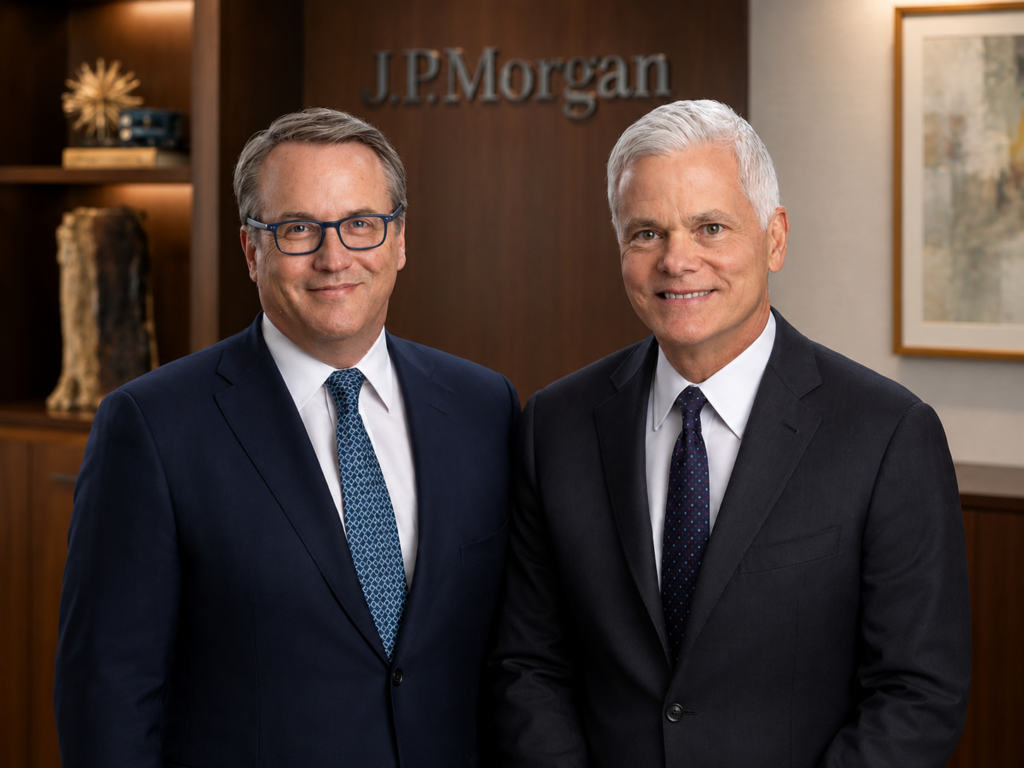
One of the top questions in the wake of JPMorgan’s announcement on who’s going to lead the company following Jamie Dimon is, Who will succeed him as Chief Executive Officer? The bank has not officially identified a successor, but last week’s executive shake-up spotlighted several veteran leaders who have been given wider roles.
JPMorgan has a history of grooming senior executives from within its ranks. It gives potential leaders an exposure across various divisions of the business before they reach to the position of all time leadership.
The Next CEO Must be All of These Things
In addition, operating the largest bank in the world by assets takes what I would call superhuman levels of skill:
- Strong financial leadership
- Global banking experience
- Risk management expertise
- Digital transformation knowledge
- Strategic decision-making ability
- Regulatory understanding
- Crisis management capabilities
Why Internal Leadership Matters
The advantages of such internal transitions are manifold — continuity, corporate culture retention and reduced talent acquisition-related risk.
Impact On Global Banking Sector
JPMorgan’s succession planning matters not simply because of what it means for the business, but also because of its significance for the world economy.
JPMorgan is one of the largest and most influential banks on earth, so its leadership decisions ultimately affect investor confidence and corporate governance practices throughout the banking industry.
Why the Other Banks Are Keeping An Eye On You
As a result of its leadership in the following areas, financial institutions from around the world keep a very close watch on JPMorgan:
- Investment banking
- Consumer banking
- Digital banking innovation
- Corporate finance
- Wealth management
Setting an Industry Standard
An open leadership succession plan shows good governance — and maybe even emboldens the other large foreign banks to double down on their own succession planning efforts.
Implications for Investors
Investors do not want to guess at what companies are planning for the long-term leadership. This planned transition addresses uncertainty and can help to assure shareholders that while a future CEO change may take place, the business will not be derailed from its long-term strategy.
The announcement also suggests that JPMorgan is looking for long-term stability rather than a short-sighted market reaction.
Benefits for Shareholders
There are many pros to the succession plan:
- Greater confidence in future leadership
- Improved corporate governance
- Lower uncertainty during leadership transitions
- Continued strategic consistency
- Stronger long-term value creation
Investor Sentiment
Most analysts will tell us that prospective succession planning is part and parcel of healthy management practices and substantive oversight, both important as we tend to invest with an eye for the long-term.
Future Gradual Transition of the Leadership at JPMorgan

The new JPMorgan CEO will take over one of the foremost financial institutions in the world, but it will not be an easy task.
Key Challenges Ahead
Leadership of the Future will have to confront:
- Economic uncertainty
- Inflation and interest rate changes
- Increasing regulatory requirements
- Artificial intelligence adoption
- Cybersecurity threats
- Digital banking competition
- Geopolitical risks
- Climate-related financial risks
Balancing Growth and Stability
The next CEO has to keep building JPMorgan’s business while exercising rigorous financial discipline, safeguarding customer trust and adapting to changing regulatory expectations.
Tech, the Role of Technology in JPMorgan’s Future
Technology has emerged towards the top of JPMorgan’s list of strategic priorities. The bank is still investing billions of dollars per year in technologies that will transform the customer experience and improve operating efficiency.
Areas of Investment
JPMorgan is focusing on:
- Artificial Intelligence (AI)
- Machine Learning
- Cloud Computing
- Cybersecurity
- Mobile Banking
- Digital Payments
- Blockchain Technology
- Fraud Detection Systems
Why The EU Regulation Presents Some Great Opportunities In Preparing For The Digital Banking Era
The future leaders will be even more important in making sure that JPMorgan continues to cut it as fintech revolutionizes the world banking arena.
What Customers Can Expect
The leadership succession plan is not expected to bring immediate changes for bank customers. It will not be instead all focus is on keeping service quality while you innovate some more.
Customer Priorities
JPMorgan aims to continue providing:
- Secure banking services
- Faster digital transactions
- Better mobile banking features
- Enhanced fraud protection
- Personalized financial solutions
Long-Term Customer Confidence
A seamless change at the top calms millions of customers who rely on JPMorgan to stand for stability, creativity and monetary strength.
Frequently Asked Questions (FAQs)
In Oct 2022, why did JPMorgan announce a succession plan?
The bank launched an extended succession plan to ensure future smooth transitions, raise investor confidence and reinforce corporate governance.
Jamie Dimon Out At JPMorgan?
Are you telling me that Jamie Dimon won’t really be chairman and CEO for at least another three years? I guess not.
JPMorgans Next CEO Has Been Named, & Its Not What Most People Think
There hasn’t yet been an official successor named. But a number of top executives has expanded their leadership roles, as part of the process to plan for CEOs succession.
What makes this announcement significant?
Since JPMorgan is one of the largest financial institutions in the world, who runs it (and how) matter to investors, customers, employees and the global banking industry.
The quick answer is no, but customers will see some immediate changes.
No: Daily banking and customer services are the other face of ensuring continuity.
Final Thoughts
The New Succession Plan at JPMorgan: A Focused and Practical Approach To One of the Most Critical Responsibilities of Corporate Governance So far JPM has pulled off the impressive trick of demonstrating, well in advance, that it will be able to transition power seamlessly from Jamie Dimon who remains its leader.
The announcement boosts transparency and confidence for investors. If you are temporarily assigned in the company you work for, it provides a framework ensuring how high-performing talent can make their way into roles that require leadership. For customers, it reinforces their commitment to innovation and world-class financial services from a stable institution in charge of managing the bank’s cash.
With constant changes to the global banking industry due to digital transformation, economic uncertainty and technological innovation at play internally and externally, JPMorgan is well-positioned for the future by acting proactively in its leadership strategy.